
Finding Bowling Green Residents
Start with the fact you already hold. The Warren County Property Valuation Administrator is the strongest first stop for a current address or an owner's name. Its parcel records show an assessed owner, tax mailing address, parcel ID, and sale context. A person search can then widen. The Kentucky voter tool, CourtNet, business filings, and license records each answer a different question. Chasing an older address works in reverse. Begin with a dated map or directory first. Then match the modern parcel. No single source rolls up everyone under one roof. Parcel data emphasizes ownership, voter records carry access limits, and business addresses may be offices rather than homes. The Bowling Green residents directory rewards comparison. Note the exact spelling, the source date, the record number, and the relationship each record actually shows.
- Search the PVA by address, owner, or parcel ID. Save the situs address and mailing address as separate facts.
- Use the Kentucky Voter Information Center only with the required identifying details.
- Move an owner name into the County Clerk's deed index and record the instrument or book and page.
- Check library directories, maps, and newspapers for a dated household or street connection.
- Ask the correct custodian for a copy or index search when the online path ends.
Bowling Green Directory Offices
Bowling Green city records, Warren County records, and Kentucky records sit with different custodians. The County Clerk records deeds. The PVA keeps the assessment files. The State Board of Elections controls its voter systems, while the Circuit Court Clerk holds the Warren County case files. Send each request to the office that created or keeps the record. That choice saves time.
Kentucky State Board of Elections
140 Walnut Street
Frankfort, KY 40601
502-573-7100
Bowling Green PVA Search
The Warren County PVA portal is the most direct public bridge. It carries a Bowling Green name straight to a parcel. Its three starting fields are address, owner, and parcel ID. Spelling matters. Street abbreviations can change a result. So try the house number with a shorter street form if a full entry fails. Owner searches should also test initials and punctuation. Copy the parcel number exactly, zeros and separators included. The map view adds aerial imagery, parcel and sales layers, roads, zoning, districts, census blocks. Measurement, drawing, and print controls sit alongside them. Those overlays help discovery. They are not final proof of any boundary from the agency responsible for it. Full address sequences appear in the Bowling Green street directory. The PVA displays 56,209 parcels loaded February 16, 2026. That scale explains why a common-name match still needs another identifier.
| Portal field | Best use | Check before relying |
|---|---|---|
| Address | Find the physical parcel | Compare situs and mailing address |
| Owner | Locate assessed property | Test initials and name variants |
| Parcel ID | Return to one exact parcel | Keep the local format intact |
| Map layers | View zoning and district context | Verify with the responsible office |
The PVA search screen shows how property discovery begins in Bowling Green.
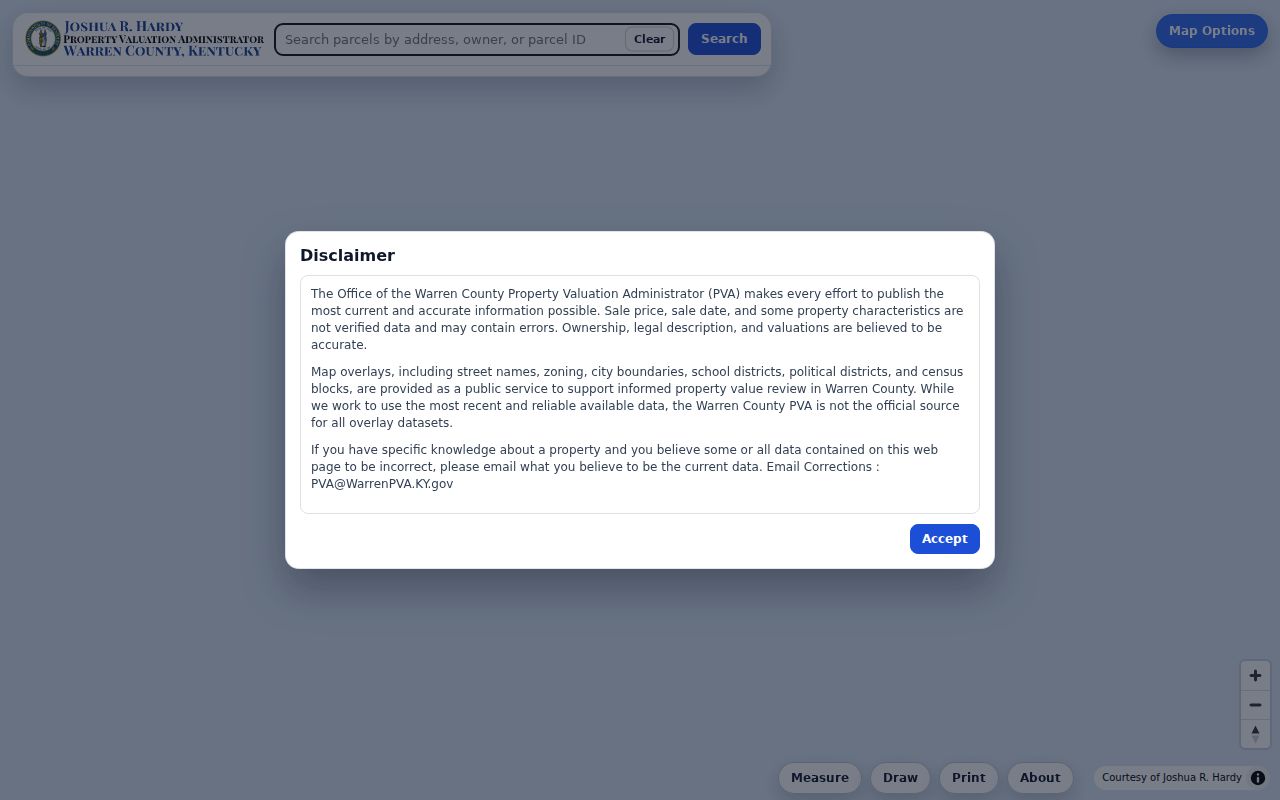
Use the displayed parcel ID to carry the search into GIS and recorded deeds.
Warren County Deed Names
Kentucky assigns no separate recorder to this local trail. The Warren County Clerk records deeds, mortgages, liens, releases, wills, marriages, assumed names, and related instruments. Its online eCCLIX route is keyed to people and instruments rather than a public address field. Work the chain instead. Start with the assessed owner from the PVA, search that person as a grantee, and read the newest deed for the prior grantor.
Online deed and mortgage indexes reach about 1966. The Clerk describes older index books back to 1813. Courthouse counter, microfilm, and copy-request routes cover images that are not online. Book and page, instrument number, legal description, and plat reference matter more than a casual street label. Request copies by phone or through the legal-records office.
Index tip. An index points to a recorded document. It is not the document itself, and the clerk's copy controls when exact wording matters.
The Warren County Clerk site groups recording services and counter access.
When scans fall short, the Clerk's own pages are the fallback for Warren County deed work.
Current Bowling Green Directory Sources
Present-day directories of Bowling Green residents are really separate, purpose-built rolls. Each roll covers one defined relationship. The property roll shows assessed ownership, voter systems show registration facts under Kentucky law, and court indexes show parties to cases. None is a complete household list.
| Source | Who It Lists | Keeper | Access |
|---|---|---|---|
| PVA parcel roll | Assessed owners | Warren County PVA | Free search and map |
| Voter Information Center | Qualified individual lookup | Kentucky elections | Identity fields required |
| eCCLIX index | Parties to recorded instruments | Warren County Clerk | Index, counter, and copy routes |
| CourtNet | Parties in public case data | Kentucky Court of Justice | Guest index; clerk verifies |
| Neighborhood groups | Public organizations, not members | Bowling Green Neighborhood Services | Free city directory |
A Bowling Green resident lookup should name the relationship found, whether owner, voter, case party, officer, or license holder. Those roles should never merge into one profile. Commercial people finders compile copies and associations that may be years stale, while official custodians give clearer dates, fields, and correction routes. Trust the custodian.
Bowling Green Voter Clues
The Kentucky Voter Information Center asks for a legal first name, last name, date of birth, and an optional last four digits of a Social Security number. It can return registration status, polling place, precinct, and absentee information. That makes it a one-person verification tool. It cannot browse everyone on a Bowling Green street.
KRS 116.095 permits inspection or copying of registration records at reasonable hours and requires Social Security numbers to be redacted. Bulk outputs follow a different route. An SBE-84 request can specify geography and formats such as household by street or ZIP. Only qualified requesters may order data. They must state a permitted purpose, accept an oath, and pay the assessed cost. Safe at Home protections still apply.
Verify Bowling Green Court Matches
CourtNet/KYeCourbs is the statewide entry point for Kentucky case lookups. It covers every county, including Bowling Green cases in Warren County. Search by party or business name, case number, or citation. Party searches accept first and last name, party type, case type, county, and other identifiers. Record what the result shows: county, case number, party role, filing date, docket events. Record the disposition as well. A claim on file is not a ruling. A calendar entry is not a final outcome.
The Warren County Circuit Court Clerk at the Warren Justice Center handles certified copies and certifications. It also handles older file locators. Guest-level data may skip images. Files moved to the State Records Center need a file locator. That center runs no broad name search. Historically retained material may instead route to KDLA.
Bowling Green Vital Routes
Births and deaths statewide are centralized by Kentucky's Office of Vital Statistics. Its records start in 1911. Marriage records date from June 1958, and divorce records from the same month. Older Warren County marriages stay with the County Clerk. Older divorce files sit with the Circuit Clerk. Access is not uniform. KRS 213.131 opens birth records after 100 years and death records after 50. Newer records require statutory eligibility, identification, or court authority.
The Vital Statistics office posts certificate and amendment channels.
A certificate proves the event it states. A cemetery result or an obituary is a separate historical clue, not a substitute.
Bowling Green Business Connections
The Kentucky business entity search returns an organization number, registered agent, current officers, founding officers or directors, and filings. Clear the active-only box when an older organization matters. An officer or agent address documents a filing role only. It is not a home address and not proof of beneficial ownership.
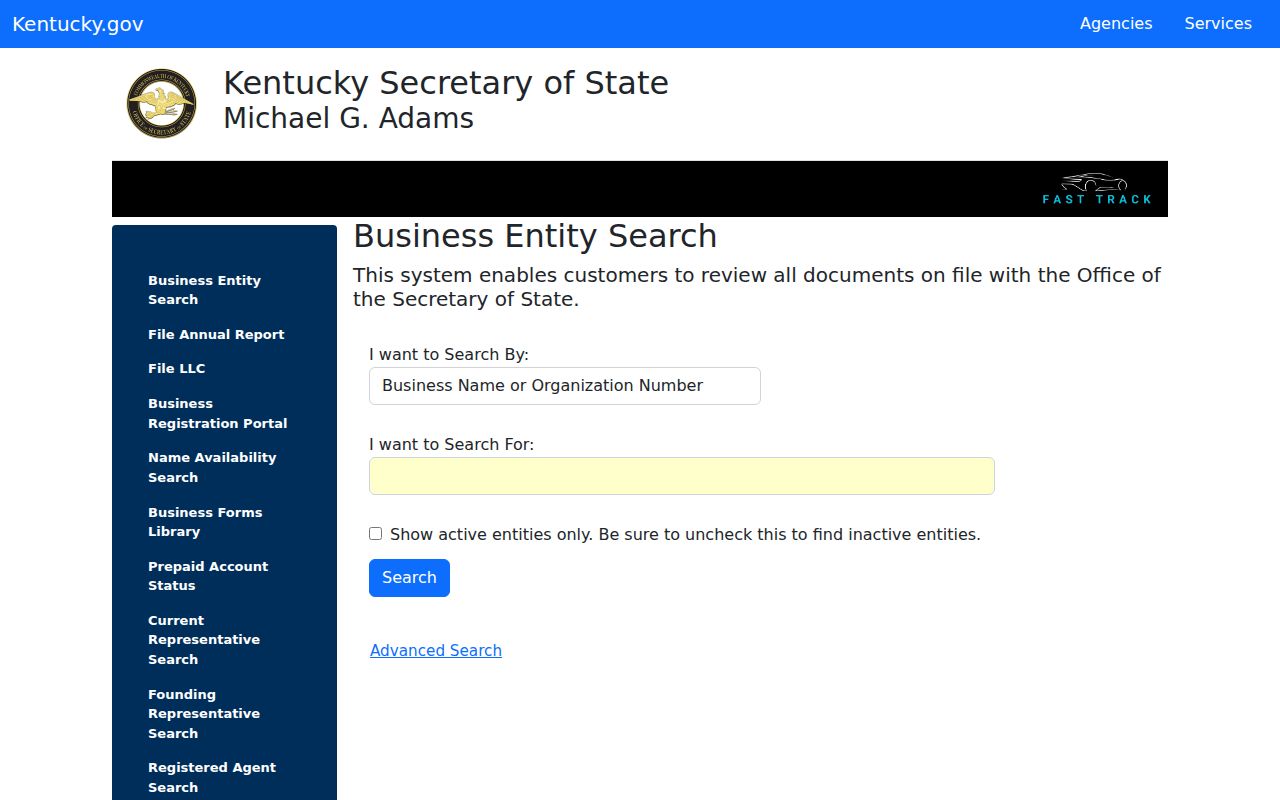
For a local sole proprietorship or DBA, pair the state result with Warren County assumed-name records.
Bowling Green Cemetery Records
Fairview Cemetery maintains a city-linked burial search. Fields include last name, first name, year of interment, veteran status, and cemetery name. Bowling Green bought the original cemetery land in 1864 and dedicated it in 1865. That timeline makes the index valuable for family research crossing the Civil War era. Still, a search result is a burial record. It is not a vital certificate or proof of kinship.
Anchor any burial result with an obituary. Add a Kentucky death index or eligible certificate request, probate files, and a directory entry from the right year. The City of Bowling Green cemetery office runs a research service. Warren County Public Library newspapers and WKU funeral-home or cemetery material can fill out details a short database row omits. Preserve the cemetery name, interment year, lot or grave field, spelling, and the date searched.
The veteran filter is a lead, not a service certificate. Confirm military facts through a military record, obituary, marker record, or family file. That distinction keeps the Bowling Green residents directory accurate when several residents share a surname.
Bowling Green Address Geography
A Bowling Green mailing label does not settle every local boundary. Postal ZIPs, the city line, voting precincts, school districts, fire districts, tax districts, and parcel boundaries are separate geographies. The City-County Planning Commission maps layer addresses, zoning, ZIP boundaries, political districts, historic areas, permits, and development conditions. The Address Explorer separates current, future, and retired addresses. It also notes that a vacant lot may not yet have an assigned address.
Verify postal delivery with USPS. Check municipal status with the official city-limits layer. Confirm the parcel itself with PVA or GIS. The four common Bowling Green postal ZIPs are 42101, 42102, 42103, and 42104, subject to a current USPS check. Historical searches also need the old street translation. Court Street became Tenth Avenue. Summer Street became College Street.
These mismatches explain why a valid record can seem absent. A GIS result may even carry a ZIP and street number while its street-name field sits blank. Keep the parcel ID, map, block, plat, and nearby landmarks. That way one missing display field does not break the lookup.
Bowling Green Privacy Gaps
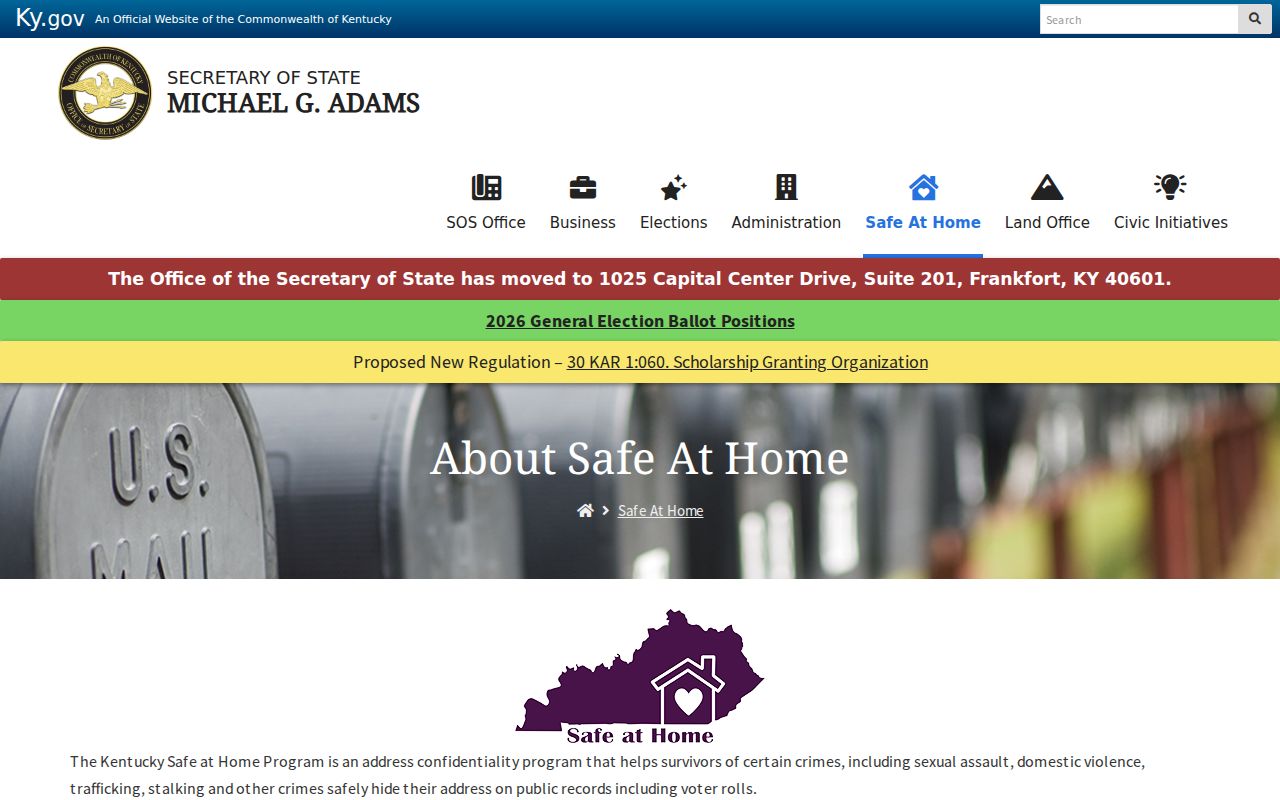
Kentucky Safe at Home gives qualifying survivors a substitute address. It also offers mail forwarding and vote-by-mail options. State and local agencies generally must accept the substitute address. A county clerk may collect a physical address for voter or vehicle registration. The clerk may not release it through the program. Real-estate holdings remain a stated exception.
The Safe at Home program explains why an otherwise plausible physical-address search may stop.
Kentucky's Consumer Data Protection Act also took effect January 1, 2026. It adds rights to access, correct, delete, obtain, and opt out of specified uses of consumer data.
Lawful use. Public access does not permit stalking, harassment, intimidation, or an attempt to defeat a protected-address program.
Request Bowling Green Records
The Kentucky Open Records Act, KRS 61.870 through 61.884, sets the request framework. KRS 61.872 lets a Kentucky resident apply by hand delivery, mail, fax, or email. No mandatory statewide form exists, though an office may publish one. Identify the custodian, record category, date range, known names or numbers, and preferred format. Ask for an index search or an existing record. Do not ask staff to answer a broad research question.
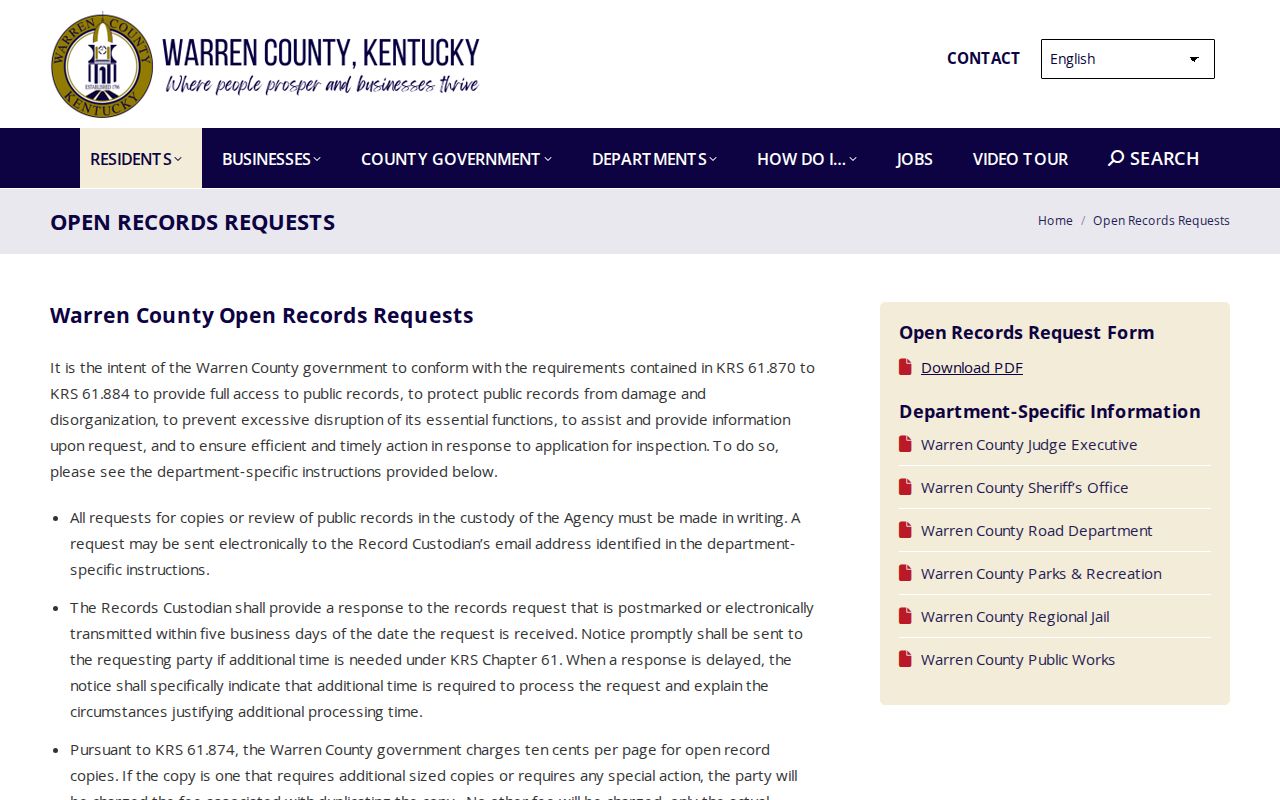
The Warren County request page posts email access and a five-business-day response period. A paper copy carries a ten-cent charge.
Bowling Green city requests instead go through the City Clerk under the municipal rules. The Bowling Green City Clerk describes custody of city minutes, ordinances, and requests.
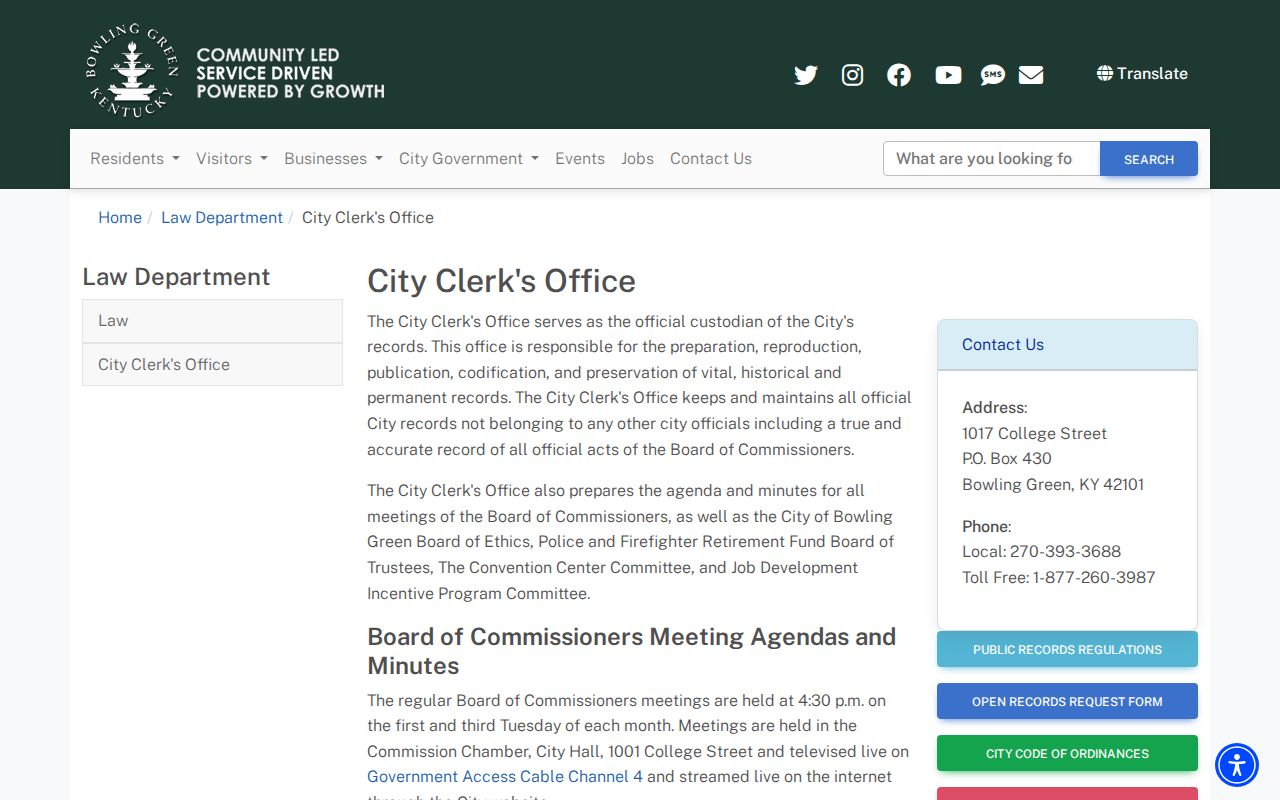
Using the correct city or county channel prevents a jurisdiction mismatch.
Historical Bowling Green Directories
The Warren County Public Library genealogy collection gathers an impressive range of material for resident lookup work. Its shelves hold city directories, cemetery books, will books, and deed abstracts. Family histories, newspapers, and subscription databases round out the holdings. WKU Special Collections adds local directories, maps, oral histories, newspapers, and cemetery files. It also keeps the Jonesville materials, which document a predominantly African American community through the mid-1960s annexation period.
Digitized holdings include Caron's 1941 Bowling Green Directory, which has a householder-by-street section. A 1962 telephone directory is also available. Telephone indexes from 1921, 1925, and 1926 are among the earlier items. The Bowling Green city directory collections show how to read and compare these street directory volumes. A dated entry may confirm a name, occupation, spouse, phone subscriber, or street address for that edition. It does not prove uninterrupted residence. Treat each city directory entry as a snapshot rather than a timeline.
- Roll
- A list created for one public purpose.
- Index
- A finding aid that points to a source record.
- Criss-cross directory
- A directory arranged by street and house number.
- Parcel
- A mapped unit of land with its own local identifier.
Watch for renamed streets in older Bowling Green records. Old Court Street is now Tenth Avenue. Old Summer Street is now College Street. A nineteenth-century paper trail can also break at the 1864 Warren County courthouse disaster, so one archive alone may not carry the full story. Bridge any gap with directory pages, Sanborn sheets, later deed books, library abstracts, and archive staff rather than assuming every record series was lost.