
Bowling Green Directory Collections
Bowling Green's verified historical shelf is a group of distinct sources, not one complete annual run. Western Kentucky University has placed several volumes in its TopSCHOLAR digital collection. Warren County Public Library describes local directories among its genealogy holdings, alongside deed abstracts, census books, wills, cemetery books, and family histories. The table states only the years confirmed by the research snapshot. Missing years should be treated as unknown until library or archive staff check the physical shelves.
| Collection | Years | Where Held | Access |
|---|---|---|---|
| Caron's city directory | 1941 | WKU TopSCHOLAR | Free digital record |
| Classified business directory | 1925 | WKU TopSCHOLAR | Free digital record |
| Southern Bell telephone directory | 1926 | WKU TopSCHOLAR | Free digital scan |
| Bowling Green telephone directory | 1962 | WKU TopSCHOLAR | Free digital scan |
| Local directories and genealogy material | Years vary | Warren County Public Library | Library and database access |
WKU's older index pages also identify telephone directories from 1921 and 1925. The precise publisher for the 1925 classified volume and the 1962 telephone book was not established from the public abstracts. Nor was a complete reverse-directory run confirmed. Those limits matter. A skipped year may reflect a shelf gap, an uncataloged item, or a volume that was never issued. Ask staff before declaring that no directory exists.
Digitized Bowling Green Volumes
The 1941 Caron's Bowling Green Directory record describes inhabitants with residences and occupations, a classified business directory, and householders arranged by street and consecutive house number. It also includes city officers, courts, churches, societies, state officers, and General Assembly material. That mix lets one volume answer both name-first and place-first questions.
The source page provides a useful view of the city directory collection:
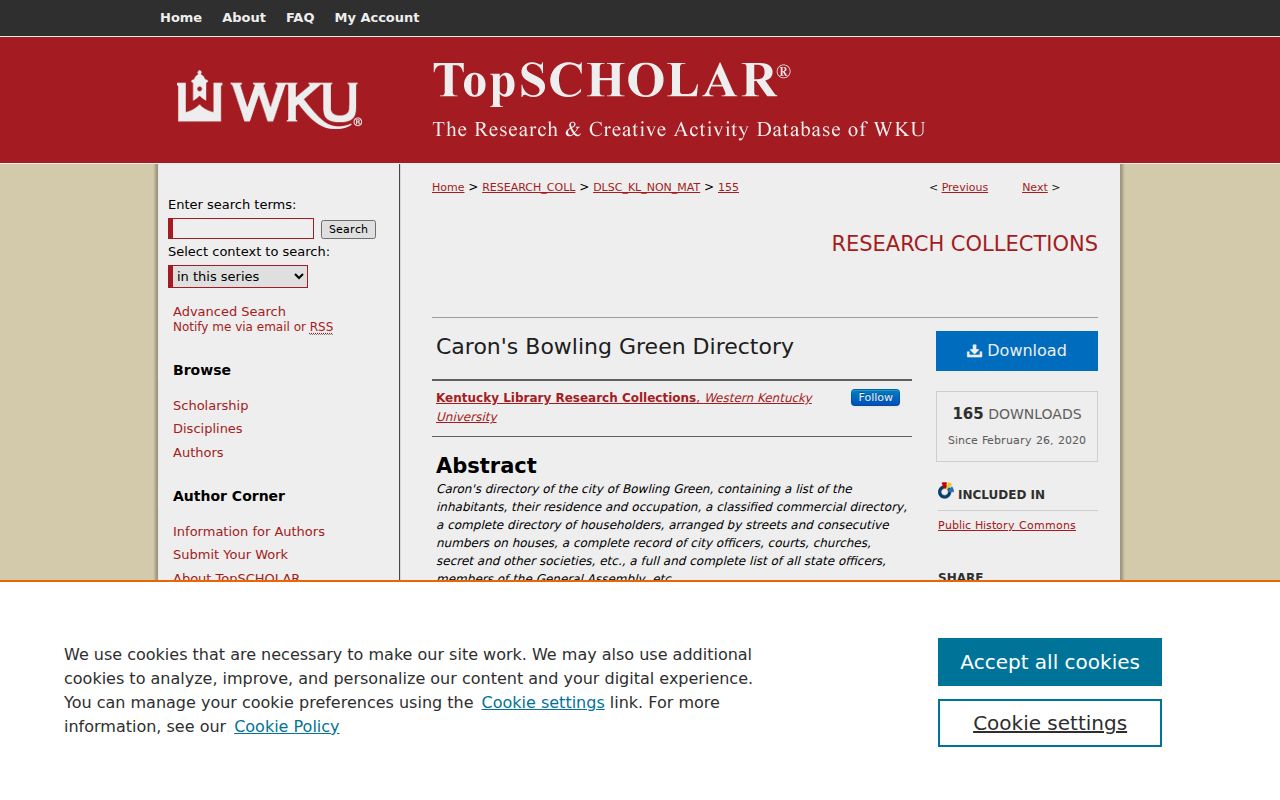
Its description confirms the street-order feature, but a page-level household transcription was not retained. Cite a page image and copy the printed spelling before publishing a specific person's details.
The 1962 Bowling Green telephone directory records service connections, moves, changes, advertisements, and local telephone listings.
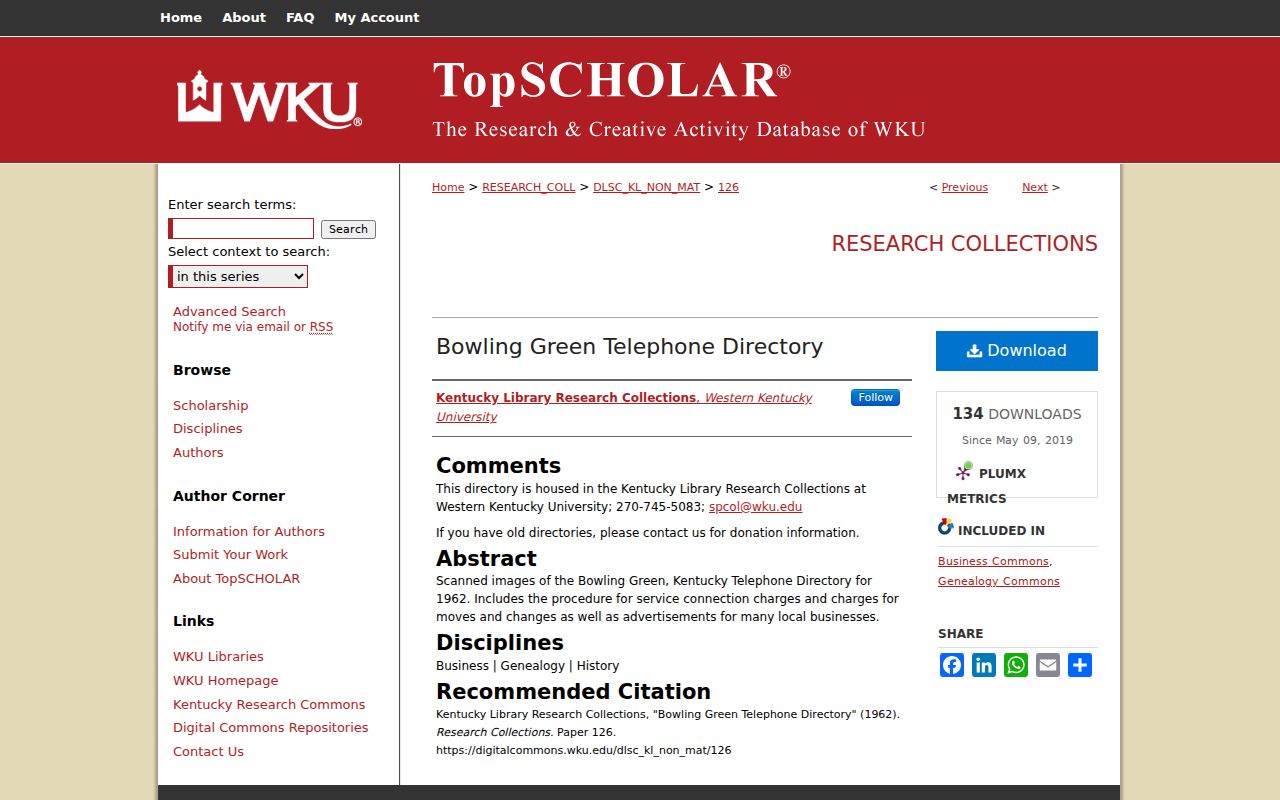
A telephone subscriber may represent a household or business. The listing does not name every person who lived at that address.
Bowling Green Genealogy Shelves
The Warren County Public Library genealogy collection reaches beyond Bowling Green into Barren, Butler, Christian, Logan, and Edmonson Counties. That regional scope helps when a household disappears from one volume but remains nearby. Local holdings include cemetery books, will books, early deed abstracts, family histories, some census books, and directories. HeritageQuest supplies census, military, immigration, cemetery, map, and city-directory material remotely and in the library. Ancestry Library Edition is limited to library computers.
The library's public genealogy page is the practical starting point for checking access:
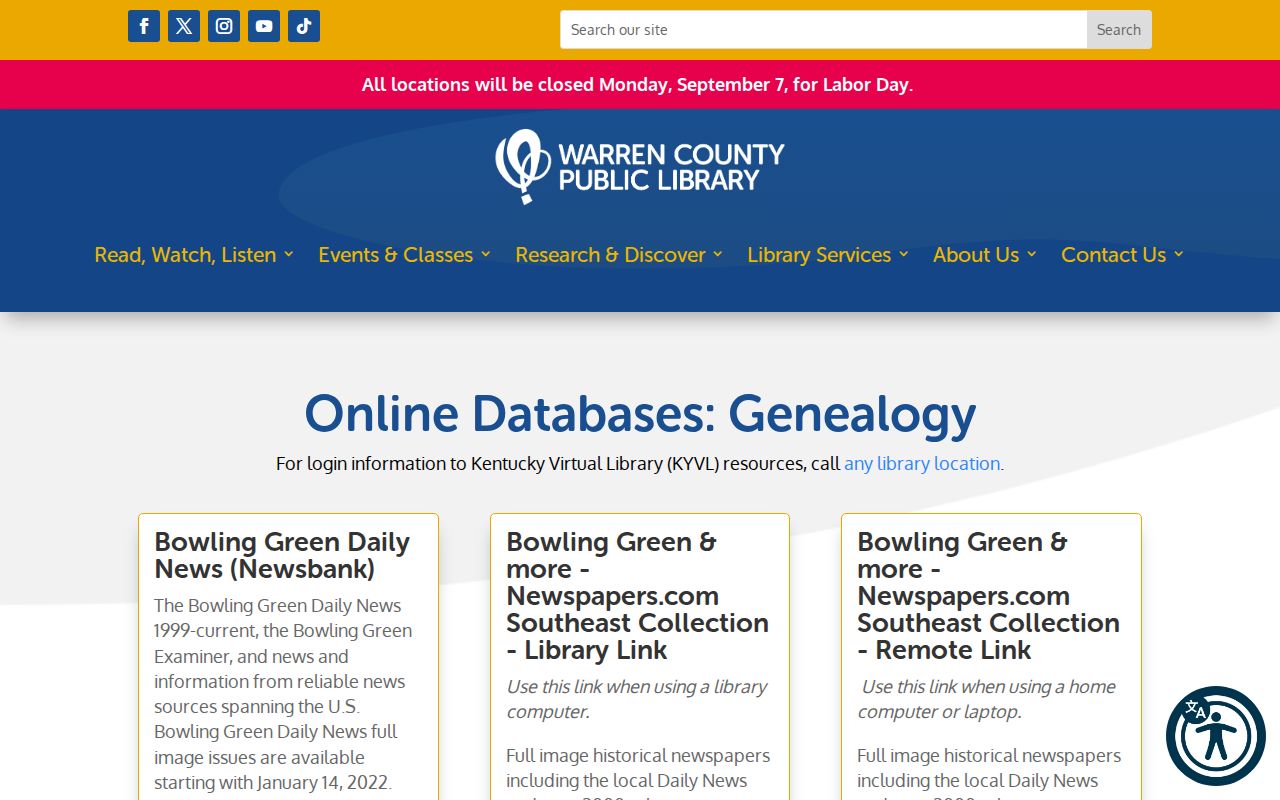
Main Library is at 1225 State Street and can be reached at 270-781-4882. Call ahead to confirm a year, format, database login rule, and whether staff can locate a page before a visit.
Read Bowling Green Directory Entries
A historical entry must be read with its title page and abbreviation key. The 1941 description verifies names, residences, occupations, and a householder-by-street section. It does not justify assuming that every expected modern field appears on every page. Capture the page number, printed name, street heading, house number, occupation or telephone field, and the exact mark used by the publisher.
| Printed name | Copy initials, spelling, and household wording exactly. |
|---|---|
| Work clue | Record an occupation or business only when the entry prints it. |
| Residence | Preserve the house number, street form, and any residence mark. |
| Telephone | Treat the named person as the subscriber, not a full household roster. |
| Page context | Save the page, street heading, volume title, and publication year. |
- Criss-cross directory
- A directory arranged by street and house number rather than only by surname.
- Householder index
- A street-order list that identifies the named person associated with each listed home.
- Abbreviation key
- The publisher's legend for shortened words and symbols. Save it before interpreting an entry.
Directory residence is a statement tied to publication time. It may lag a move. A telephone book may omit unlisted households, and an alphabetical city directory may list one householder rather than all occupants.
WKU's Bowling Green Archive
WKU Special Collections holds city directories, yearbooks, local newspapers, maps, cemetery books, funeral-home records, Kentucky death certificates from 1911 through 1965, family files, photographs, oral histories, and county histories. The department is on the second floor of Cravens Library at 1547 Normal Street. Its summer 2026 schedule was by appointment Tuesday through Thursday, 10:00 a.m. to 2:00 p.m.; seasonal hours should be checked before travel. Reference help is available at 270-745-5083 and spcol@wku.edu.
The archive page outlines the kinds of sources that can extend a city directory search:

Ask for a specific year, surname, street, and source type. That gives staff a much better question than a request for everything about a family.
Jonesville Lives in the Archive
WKU preserves material about Jonesville, a predominantly African American community that existed from the early 1880s through the mid-1960s annexation period. Photographs, oral histories, maps, local records, and directory clues can restore people and places that a present-day street search will miss. This is a local reason to keep neighborhood context beside a name.
A city directory line can identify a resident and address at one date. Jonesville collections can add voices, images, kin networks, institutions, and the history of the land itself. Search the historical street form, then compare it with maps and archive descriptions. Do not force an old location into a current parcel until a map or deed supports the match.
Maps and Newspapers Add Context
The 1877 Beers Map of Warren County names residents or landowners, towns, and businesses, and includes population context. The index to Bowling Green special-edition newspapers covers bound volumes from 1900, 1902, 1907, 1911, and 1917. Its subjects include local people, officials, houses, schools, churches, businesses, and civic history.
These bridge sources can explain why a name appears near a place before or between surviving directory years. A map label may mean landowner, resident, or business, so record the legend and date. A newspaper mention may be an advertisement, legal notice, social item, or retrospective story. Preserve that context rather than reducing every hit to an address claim.
Closing a Bowling Green Trail
The city-linked Fairview Cemetery search accepts last name, first name, year of interment, veteran status, and cemetery name. Starting with two or three surname letters can help. Results may provide cemetery and grave details, but a burial record does not prove a person's last home or every family relationship.
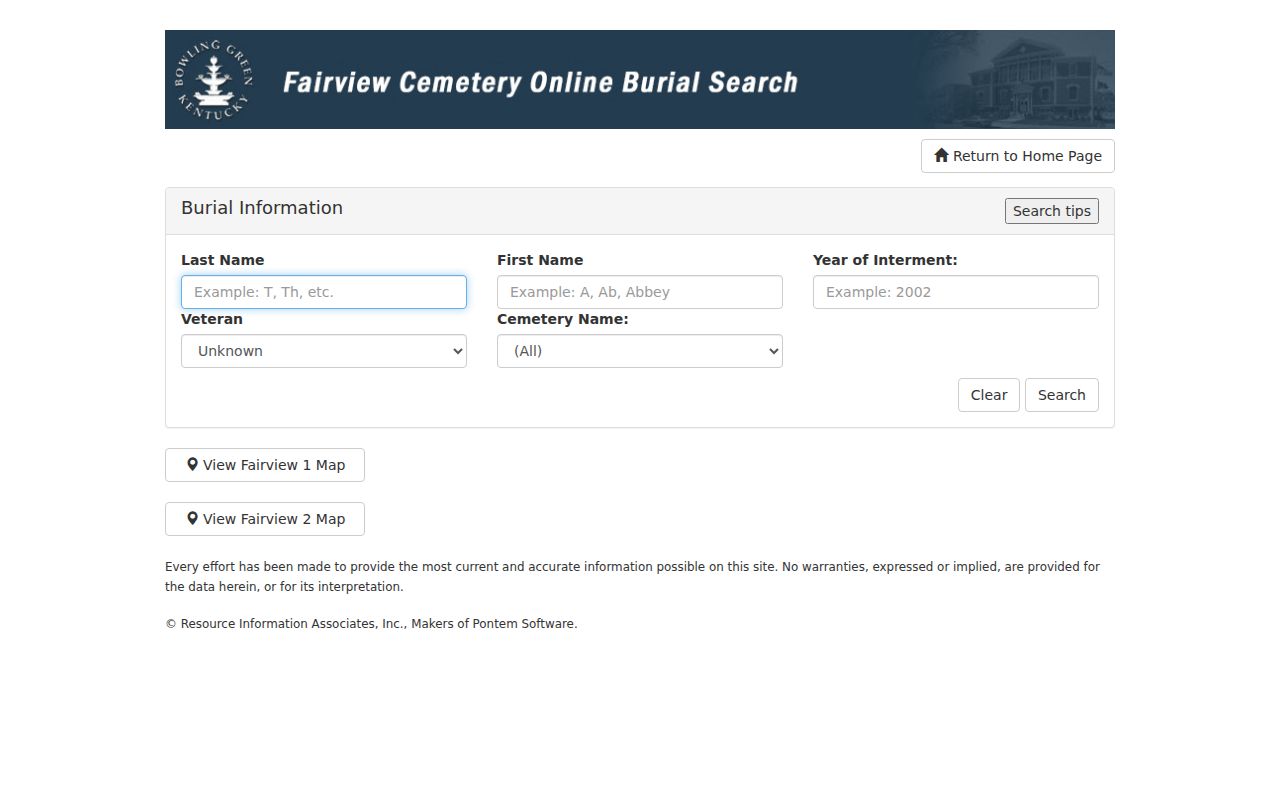
If the portal fails, cemetery staff at 1209 Fairview Avenue can assist on weekdays from 7:00 a.m. to 4:00 p.m. at 270-393-3607. Pair a burial result with an obituary, death record, directory entry, or family file.
Trace Bowling Green Families
Use each Bowling Green city directory as one dated point. The goal is a chain of sources, not a merged profile. Census schedules can supply household relationships at public census dates, while directories fill selected years between them. Maps, newspapers, deeds, cemetery sources, and vital records test whether two similar names refer to the same person.
- Begin with the best-known surname, street, and approximate date. Search the nearest verified directory year.
- Copy the entry exactly, including initials, occupation, address, page, and source title.
- Check the street-order section where available. Nearby householders can separate people with the same name.
- Compare the listing with the nearest public federal census, then test changes in later directories.
- Close a disappearance with newspapers, Fairview Cemetery, death records, probate material, or a deed.
An absent name does not prove death or departure. The person may have moved within Bowling Green, used initials, lived in another named household, lacked telephone service, or fallen into a missing publication year. Search spelling variants and the street itself. For one-address research, continue with the Bowling Green previous residents workflow.
Note: Every historical listing needs its publication year because a city directory does not establish current occupancy.